Severity: Warning
Message: Attempt to read property "brand_name" on bool
Filename: controllers/Products.php
Line Number: 670
Backtrace:
File: /home/shantechgr/domains/shantechgroups.com/public_html/application/controllers/Products.php
Line: 670
Function: _error_handler
File: /home/shantechgr/domains/shantechgroups.com/public_html/index.php
Line: 318
Function: require_once
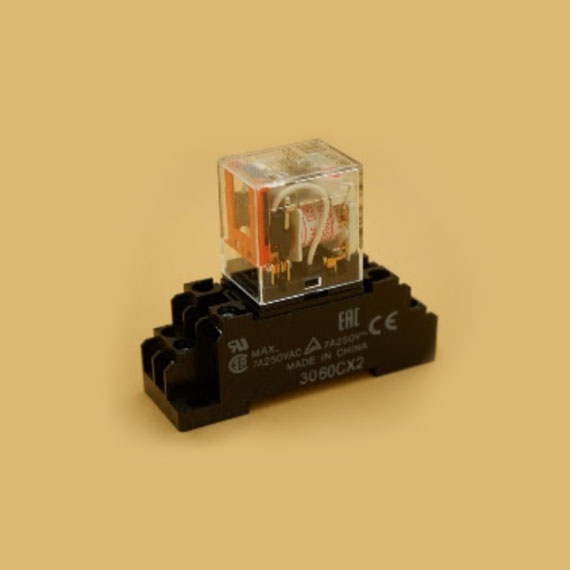
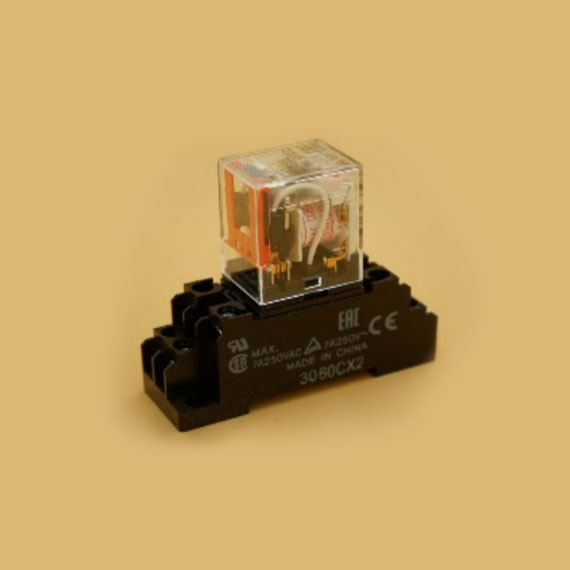
A relay is an electrically operated switch that functions based on electromagnetic induction.
It consists of a coil and contacts — when electrical current flows through the coil, it generates a magnetic field that moves the contacts, changing their state (normally open → closed, or normally closed → open).
This allows the relay to control the flow of current in another circuit. Typically, relays use low-voltage control signals to operate high-power electrical circuits, providing isolation between the control and power circuits for safety and reliability.
Key Features of Relays
Relays are designed to control high-power electrical circuits using low-power signals — making it possible to safely control devices such as motors, heaters, and compressors using low-voltage control signals from controllers or microcontrollers.
They are available in a wide variety of types and specifications, including Power Relays, Solid State Relays (SSR) with no moving parts, and miniature signal relays for electronic circuits. Each type offers specific advantages depending on the application and can operate with either AC or DC voltage.
Relays are built for durability and reliability.
Electromagnetic relays with mechanical contacts are engineered to withstand frequent switching, while SSR models offer even higher durability due to their non-mechanical design — ensuring longer operational life and minimal maintenance.
Installation is simple and flexible, with multiple mounting options such as socket plug-in, PCB mount, or DIN rail installation, making them suitable for various control panels and system configurations.
Benefits in Control and Refrigeration Systems
Circuit Isolation & Protection
Relays provide electrical isolation between low-voltage control circuits and high-voltage power circuits, preventing potential damage to sensitive control electronics and enhancing overall system safety.
High-Power Device Control
Relays allow small electrical signals — for example, from a thermostat or PLC (Programmable Logic Controller) — to safely and efficiently control high-power devices such as compressors, pumps, and heaters in refrigeration systems.
Flexible and Cost-Effective Design
Compared to direct power switches or complex electronic controllers, relays offer a more economical and adaptable solution for circuit design, making system expansion or modification easier.
Overload and Short-Circuit Protection
When used with complementary devices like overload relays, relays can help protect equipment from excessive current or short circuits, ensuring reliability and longevity for refrigeration and control systems.