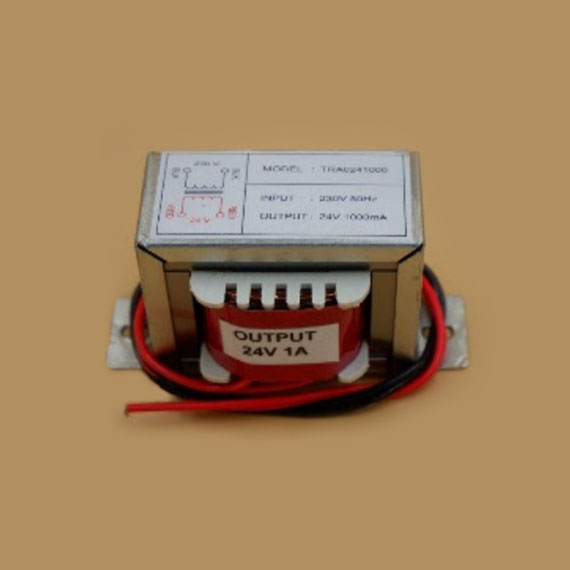
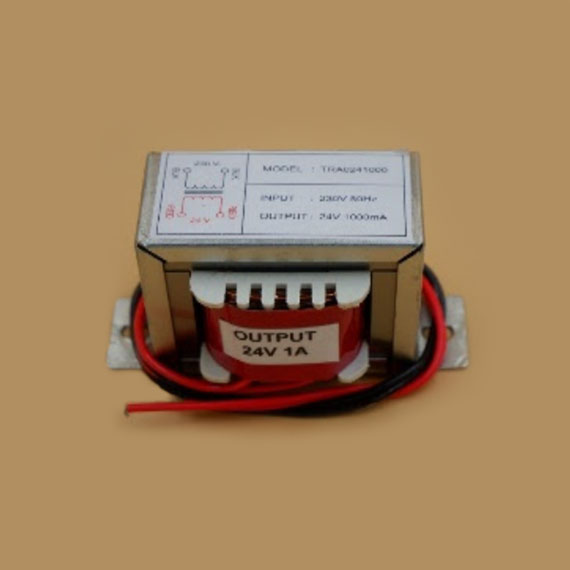
The CAREL DC Transformer converts alternating current (AC) from main power sources (e.g., 220V AC residential or 380V AC industrial) into direct current (DC) with a stable voltage suitable for electronic devices such as 12V DC or 24V DC. Commonly known as a DC Power Supply or AC-DC Converter, it is essential for control systems where controllers and sensors in refrigeration and HVAC applications require reliable DC power to operate efficiently.
Key Features of the CAREL DC Transformer
The CAREL DC Transformer provides stable and precise DC output, maintaining consistent voltage with low ripple to ensure smooth operation of connected electronic devices, preventing malfunctions caused by unstable power supply.
It offers high energy conversion efficiency, minimizing energy loss as heat and promoting overall energy savings. Built-in comprehensive protection features include:
Overcurrent protection
Overvoltage protection
Short circuit protection
(Some models) Over-temperature protection
These ensure both equipment safety and user protection during operation.
The transformer features a compact and easy-to-install design, suitable for DIN rail or panel mounting, optimizing space within control panels. Constructed from high-quality, durable materials, it withstands temperature fluctuations and humidity — ideal for harsh refrigeration environments.
Benefits for Refrigeration and HVAC Systems
Using CAREL DC transformers offers several operational advantages:
Reliable Power Supply
Provides clean, stable DC power for controllers, sensors, and electronic expansion valves (EEVs), ensuring accurate and dependable system control.
Enhanced System Efficiency
Consistent power delivery helps refrigeration or HVAC systems maintain optimal efficiency, improving temperature and humidity control precision.
Protection for Electronic Components
Safeguards sensitive devices from voltage spikes, surges, and electrical interference — extending the lifespan of high-value components.
Simplified Maintenance & Wiring
Centralized DC distribution reduces wiring complexity, eases maintenance, and improves overall system design flexibility.