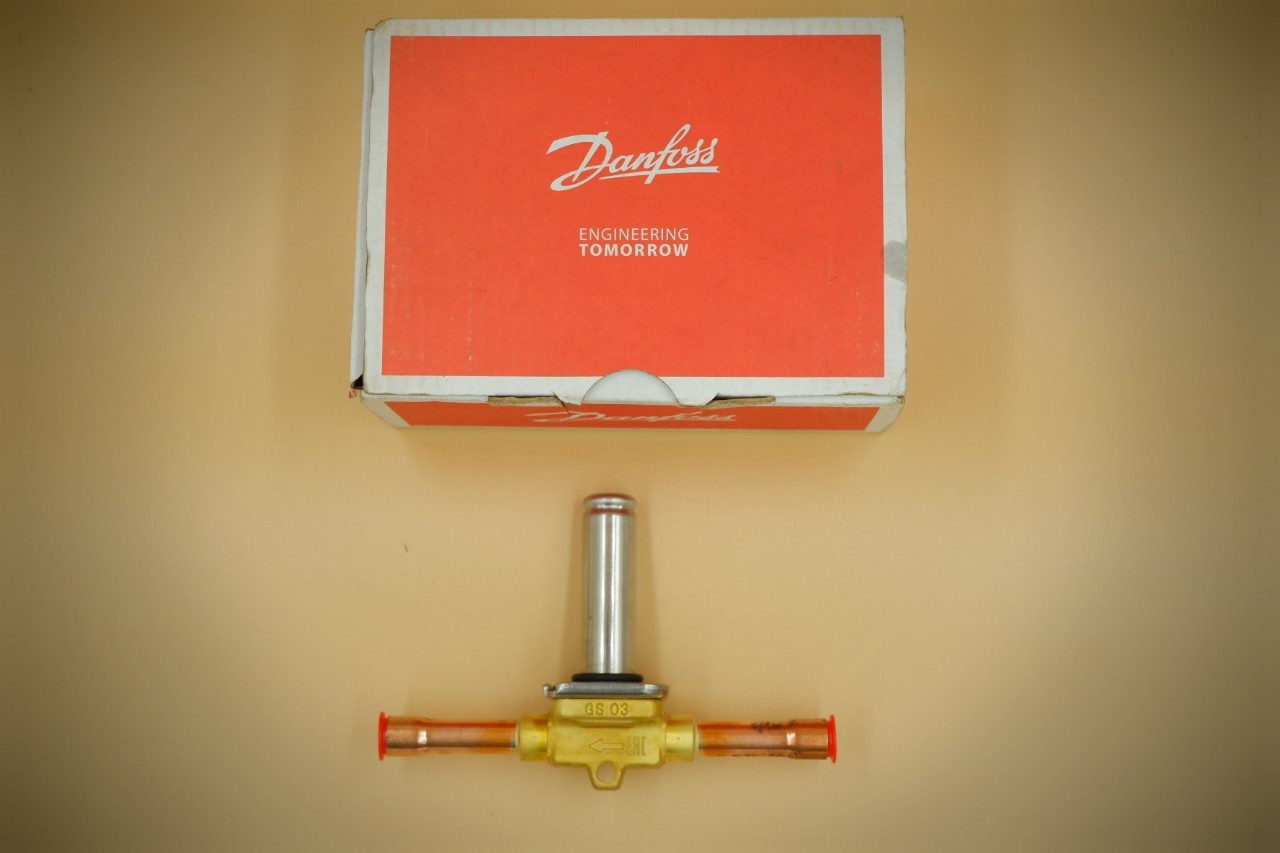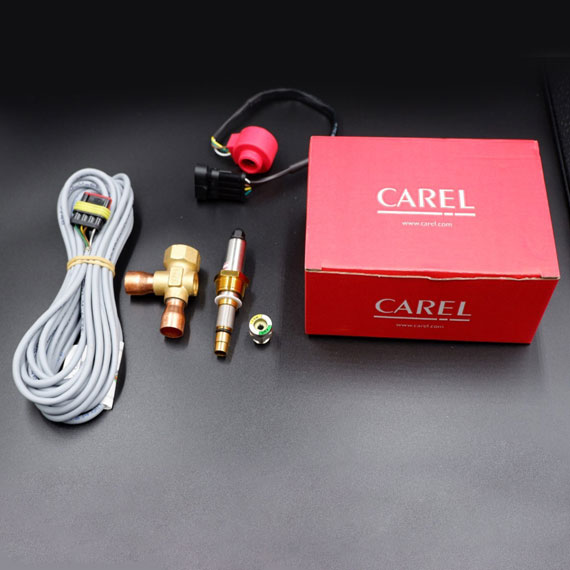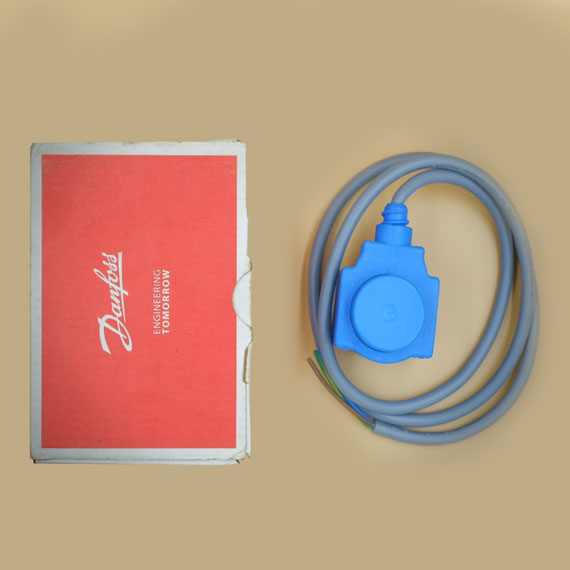
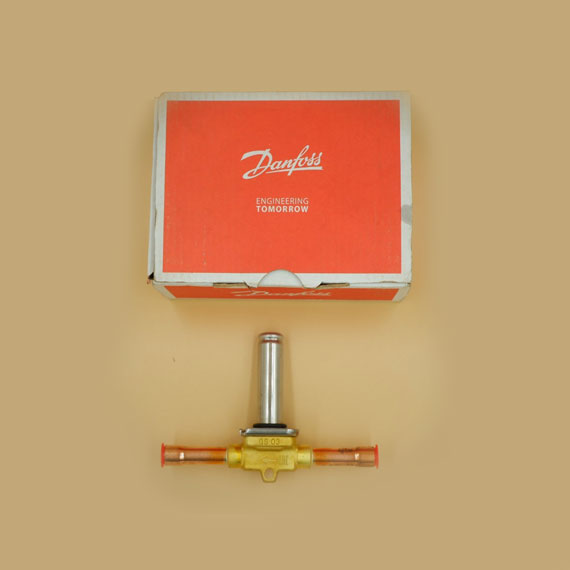
The Danfoss Solenoid Valve is an electrically operated valve used to control the flow of refrigerant. It is typically a normally closed (NC) type, meaning the valve remains closed when de-energized. When the solenoid coil is energized, it creates a magnetic field that lifts the internal plunger, opening the valve to allow refrigerant flow. Once the current is cut off, the plunger returns to its seat, closing the valve.
This design enables precise and automatic control of refrigeration circuits, making the system efficient and reliable for both industrial and commercial applications.
Key Features of Danfoss Solenoid Valves
Rugged and Durable Construction
Danfoss solenoid valves are made from high-quality materials such as brass or stainless steel (depending on the model), engineered to withstand high pressure, temperature variations, and refrigerant corrosion. This ensures long service life and reliability even under demanding operating conditions.
Superior Sealing Performance
Each valve is equipped with precision-engineered seals that prevent refrigerant leakage, helping maintain system performance and minimize refrigerant loss—crucial for both efficiency and environmental safety.
Flexible Compatibility and Voltage Options
Danfoss solenoid valves are compatible with a wide range of coil types and voltage ratings—AC (24V, 115V, 230V, 400V) and DC (12V, 24V)—offering flexibility for integration into various control systems. They also support a broad range of refrigerants, including HFCs, HCFCs, and natural refrigerants such as ammonia (NH₃) and CO₂ (R744).
Easy Installation and Maintenance
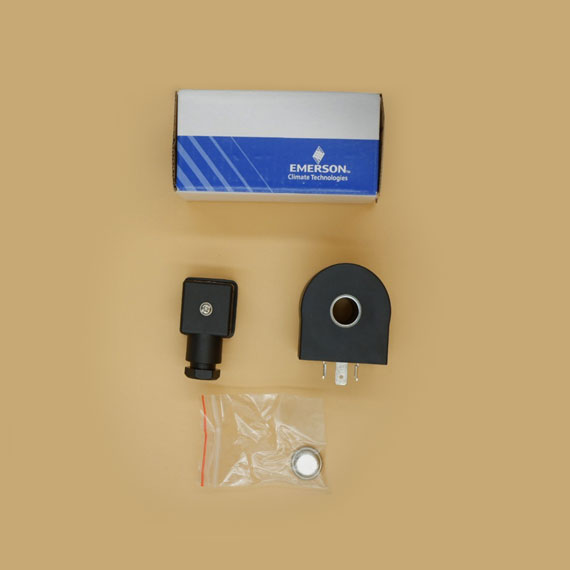
Many Danfoss valves feature the Clip-on coil system, allowing for tool-free installation and replacement. Coils can be quickly removed or replaced without disconnecting the valve from the piping system, reducing maintenance time and cost.
Benefits in Refrigeration Systems
Precise Refrigerant Flow Control
Enables accurate control of refrigerant quantity and timing within different parts of the system—such as liquid injection into evaporators, hot-gas defrost cycles, or circuit separation—resulting in optimal cooling performance.
Improved Energy Efficiency
With precise refrigerant flow management, the system operates only as needed, reducing overwork and unnecessary power consumption. This leads to improved system performance and lower operating costs.
Protection of System Components
Reliable refrigerant control helps prevent liquid refrigerant return (liquid slugging) and irregular refrigerant flow, which could otherwise cause severe damage to compressors and other critical components.
Enhanced Safety and Automation
The electrically operated design supports remote operation and programmable control, improving operational safety and reducing risks associated with refrigerant leakage or system malfunction.
Reduced Downtime and Simplified Maintenance
The modular valve and clip-on coil design allows for quick service or replacement without removing the valve body, minimizing system downtime and ensuring continuous operation.